
Given the current economic climate and certain reforms imposed by the EU, we risk having structurally expensive energy. This undermines our sovereignty and our ability (i) to ensure our prosperity and (ii) to decarbonise. The Mouvement Réformateur wants to raise awareness. Europe is highly vulnerable geopolitically in terms of energy. It must return to the pragmatism of its founding and revive its industrial sectors.
Observation.
- Europe is facing structurally too expensive energy, due to the combined effect of international geopolitical tensions, its strong external dependence on oil and gas, and an accumulation of European standards, taxes and obligations that structurally increase the cost of energy. This situation penalises both households' purchasing power, businesses' competitiveness and the European Union's ability to preserve its industrial fabric.
- This excessive energy cost directly undermines decarbonisation goals. The energy transition indeed requires massive investment in electrification, nuclear power, renewable energy, grids and low-carbon industrial technologies. Yet overly expensive energy precisely holds back these investments, weakens Europe's strategic sectors and accelerates industrial relocation. Europe thus risks losing both its economic sovereignty and its ability to deliver a credible climate transition.
- The conclusion is clear: decarbonisation cannot happen in a context of impoverishment, over-regulation and deindustrialisation. It must be based on abundant, accessible and competitive energy.
What we advocate.
- We advocate an energy policy based on pragmatism, sovereignty and technological neutrality. This first means diversifying our supply sources and routes as much as possible, securing long-term contracts, and putting energy issues back at the heart of European foreign policy.
- We also advocate reducing the structural costs weighing on the energy bill, by limiting increases in taxes, surcharges, network costs and excessive regulatory obligations. European texts such as ETS II, RED III or PEB IV must be reviewed, phased in and adapted to the economic and social reality on the ground, without questioning the final climate goal. Without change, these European texts coming into force would mean a structural price of €2/litre from 2028. For the MR, that is out of the question.
- Finally, we advocate a credible energy mix, combining nuclear power, renewables, efficiency gains and storage capacity, with clear support for the re-industrialisation of low-carbon sectors in Europe.
1. Expensive energy is blocking decarbonisation
The exceptional press conference held by the Mouvement Réformateur on 2 April 2026, attended by MR President Georges-Louis Bouchez, Federal Minister for Energy Mathieu Bihet and Walloon Minister for Energy Cécile Neven, focused mainly on the issue of high energy costs, resulting both from (1) the economic climate and (2) certain structural measures of the European Union. This undermines our goals, including decarbonisation.
The causal chain is as follows:
- 1) Expensive energy prevents the maintenance and redevelopment of an industrial fabric in strategic sectors (no sovereignty).
- 2) The absence of an industrial fabric makes our entire economic structure vulnerable. Its fundamentals are no longer secure (no prosperity).
- 3) This also means there are no decarbonised energy sectors where we are relatively autonomous from abroad, nor is a circular economy possible (chemicals, metallic and non-metallic raw materials, etc.).
2. We want abundant energy
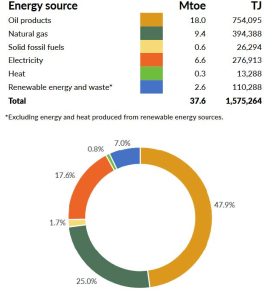
We remain highly dependent on oil and gas in our final energy consumption, accounting for more than 75% of our total energy supply. 1 These sectors must not be left without diversification or investment. Doing politics means being responsible and, faced with a fundamentally changed situation, accepting measures previously considered taboo.
- We must diversify our supply, sign long-term contracts, and prioritise our economic interests in the energy field.
- Indiscriminately raising all taxes and levies on these energy sources undermines the competitiveness of EU industry and erodes households' purchasing power
- Do not divest from these sectors that are vital to the economy. Investing in decarbonisation sectors also requires pragmatism about other energy sources.
3. We want affordable energy
We face a dual risk, one cyclical and one structural:
- 1) Cyclical: the blockage of the Strait of Hormuz affects oil and gas flows and puts pressure on prices. Above all, it demonstrates Europe's vulnerability, having cut off its gas supply from the East (Russia) and being highly dependent on overseas sources for both oil and gas.
- 2) We are creating structurally expensive energy:
The destruction of certain infrastructure in Qatar poses a risk of prolonged price tensions.
- We must diversify our supply routes as much as possible and put energy back at the heart of EU foreign policy
European legislation places heavy burdens on energy bills (taxes, support obligations, etc.). Furthermore, we are also technologically dependent for many renewable energy sources.
- We must revise the legislation that creates expensive energy
- And contrary to certain green proposals, we must limit energy taxes. Fossil fuels are taxed to the tune of several billion euros a year in our country.
- We must make electricity cheaper by limiting cost increases across all components of the bill (surcharges, taxes, networks and commodity).
- We must regain a foothold in decarbonisation sectors, or risk swapping one dependency for another.
4. We want decarbonised energy
We will achieve it with the right choices
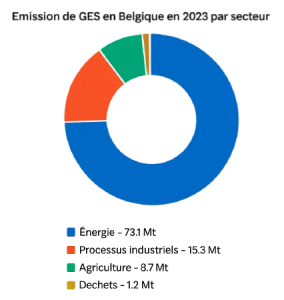
75% of our carbon emissions come from the energy we consume. We all want to decarbonise our energy. But this relies on ambitious industrial development. And this industrial capacity is now under threat.
As shown on page 1, our final energy consumption was around 440 TWh/year in 2024.
Overall, it can be estimated that renewables represent around 14% of our final consumption (electrical renewables and decarbonised molecules).
With the shutdown of two reactors in 2024, the share of nuclear power in final consumption fell to around 7% of the total.
Overall, it can be estimated that 20% of our mix was decarbonised in 2024, including all renewables and nuclear power then in operation.
Even with a considerable effort, we will barely reach 25% decarbonised energy within 5 years, at a prohibitive cost (RED III, etc.).
- It is urgent to revive European industry in these sectors.
- Where is the European response on raw materials, technological dependencies, and access to cheap energy to preserve competitiveness?
Expensive energy will not help us achieve our goals of sovereignty or the circular economy (steel, chemicals, batteries, etc.).
5. Expensive energy is not inevitable but a political choice
The world's two great powers have chosen a sovereign energy policy with cheap energy. Expensive energy is not inevitable!
US natural gas (HenryHub: around $10/MWh) is around 4 to 5 times cheaper than the European index (TTF: around €50/MWh last month). Under normal circumstances, it is 3 times cheaper.
Electricity is structurally cheaper there than in Europe, as are petroleum products.
China is as dependent on gas as the EU but is pursuing a very significant diversification strategy. It is electrifying as much as possible, relying on hydropower, nuclear power, renewables and coal (still 55% of the electricity mix). For petroleum products, it is dependent but builds up substantial stocks. This allows it to absorb shocks.
6. Achieving the climate goals
> EITHER BY BECOMING POOR
> OR BY REMAINING PROSPEROUS
We do not dispute the goal of decarbonisation by 2050, but rather the mandatory and restrictive methods imposed by Europe to achieve it.
In this regard, the MR's proposal fundamentally differs from the green proposal, which relies almost exclusively on a considerable reduction in energy consumption to achieve its decarbonisation goals.
For the MR, a lot of energy will be needed to:
- Ensure our prosperity and enable the energy transition.
- Set up a more circular economy on our territory. Transforming for reuse or recycling also consumes energy.
However, hard-to-access and expensive energy strangles economic and social development, including in the field of the energy transition. It also hinders the fight against precariousness.
The path followed by the EU is one of impoverishment. Its industrial fabric is eroding, along with its sovereignty. We are becoming climate virtuous partly thanks to our energy transition, but above all because we export our pollution and greenhouse gases while importing our products, including essential goods.
We refuse to accept this inevitability.
7. Making ourselves disappear will not change the climate reality
Developing ourselves can change everything
Since the industrial revolution, greenhouse gas emissions have continued to rise year after year.
The European Union is reducing its emissions and now accounts for 6.3% of global greenhouse gases (2024 figures).
Of course, we must play our part in the climate effort. But our own suicide will not change the climate reality. We are no longer the driver of global emissions growth. We are, however, well aware of the challenge and motivated to act. We must innovate to decarbonise ourselves, but also the rest of the world. And that can only happen if we have competitive industrial solutions.
- Our disappearance would be a disaster, given that we can offer the rest of the world industrial, technical and financial solutions and experience.
- But to do so, we must become competitive again in our fundamentals, stop stifling our talent, and conquer markets.

8. The MR proposes and is working towards a credible energy mix
In July 2023, the MR proposed its energy mix. It is now working with its ministers every day to implement it.
The MR's energy mix aimed to provide our country with a much broader, far more self-sufficient energy supply (up to 58%), while accepting a share of imports.

We cannot be accused of failing to promote a mix that includes nuclear power, renewables and considerable energy efficiency gains through electrification. Indeed, the electrification rate in the MR's mix is around 40%, with strategic storage capacity on our territory.
The MR has therefore long championed these solutions. What we want is to be able to implement them. Our energy mix is pragmatic, based on strong but sustainable electrification.
For example, electricity generation capacity is concentrated in large hubs, easing grid investment needs. The surcharges levied on bills to support renewables or other capacity are kept limited.
We will get nowhere and will not convince our citizens and businesses with poorly calibrated, and therefore expensive, investment cliffs.
9. The industrial fabric is collapsing
Businesses are leaving the EU
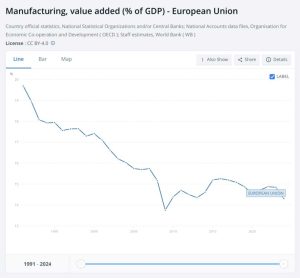
Industry now accounts for only 14.3% of EU GDP, down from 20% in 1990. Energy-intensive sectors have lost around 20% of production since 2019.
Despite the post-crisis decline, industrial energy prices still jumped by 66% between 2021 and 2025, and the energy import bill reached €427 billion in 2024.
Energy is the second most important factor determining competitiveness (after labour costs) and the third most important driver of household precariousness (after housing and food).
In cleantech, the EU is massively dependent on China (around 94% of solar panels, around 50% of batteries), and local production remains 20-30% more expensive: without a credible Clean Industrial Deal, the transition will take place with factories located elsewhere.
The European Commissioner has announced a target of 20% industry in EU GDP by 2035. Is that realistic if the fundamentals are not in place?
Chart source: Manufacturing, value added (% of GDP) - European Union | Data
10. For the survival of European industry, this is the moment of truth
We have held three conferences in recent months: one on industry, a second on digital technology, and a third on the major European challenges.
All the warning lights are flashing bright red: it turns out we have severely damaged all our strategic sectors over 30 years: agriculture, defence, digital, energy, finance, and more. It's one minute to midnight.
We need pragmatism and a long-term outlook. We are capable of innovating to meet all the major challenges of our time.
But progress is never achieved:
- Through bureaucracy and opaque regulations,
- By denying physical and economic reality.
=> Obligations must be drastically simplified to keep only the essentials: the climate target for our responsibility, prosperity for our fellow citizens, sovereignty for our protection.
11. An energy standard for industry
On a proposal by Mathieu Bihet, the federal Government adopted an energy standard with a budget of €944 million spread over 3 years.
€500 million has already been allocated to limit network costs for certain electro-intensive companies. The rest of the budget is intended to support a broader range of businesses in collaboration with the Regions.
MR Ministers are taking concrete action to limit costs for businesses and households.
We must keep going in this direction.
12. Between 50 and 100 strategies and binding legal texts. Ministers must not become European civil servants
That is today's European reality.
- For every problem it encounters, the Commission draws up a plan.
- Today there are dozens of plans, amended every 3 years, duplicated into national plans, with sectoral sub-targets. There are plans to do, to undo, to innovate, to specifically not innovate, competitiveness plans that pile up (without cancelling out) plans that undermine competitiveness.
- And finally there are the markets, where all economic actors end up being subsidised by different pieces of legislation.
An opaque regulatory system, breeding arbitrariness and injustice. State actors turned into agents implementing plans, economic actors worried about the latest fad brewing in institutions where no one understands the decision-making process.
There is no more economic freedom. No more economic logic. Meanwhile, our competitors are innovating, becoming more competitive, and securing their economic foundations.
13. ECSC 1951 - Euratom 1957: rediscovering the spirit of the founding fathers
And yet. Not so long ago, Europe explicitly pursued the same policy as today's two great powers did at their founding: sovereignty, abundant energy, cheap energy.
We are adding the climate target. But only if we give ourselves the means to achieve it!
We must return to pragmatism by removing all non-essential legislation, concentrating all our resources on strategic sectors and our strengths, and playing our part in the concert of nations.
We have a voice in the world, and we intend to defend our interests by ensuring our protection and our prosperity!
14. Stop over-regulation, yes to decarbonised industry
Decarbonising the energy mix will require very large investments in the most well-mastered technologies, without inflating the overall bill.
It should be up to Member States to choose the means to achieve a results-based obligation. This allows multiple paths to be tested and far more intelligence to be deployed through trial and error. It is not Eurocrats who are the most agile and competent at finding these methods, but engineers, CEOs and entrepreneurs.
=> It is essential to factor in the full cost of each technology, not just the LCOE. Only the system cost matters, along with its robustness in the face of crises.
=> The cost per tonne of CO2 avoided must be used for every measure taken within the climate framework:
Too often, measures are included in the NECP but have only a limited impact on the decarbonisation of the economy. By contrast, extending T1 by 10 years would avoid 20 million tonnes of CO2 over that period.
15. “The strategic mistake”: abandoning nuclear power, yet double standards on low-carbon energy in the EU
The EU is finally waking up on nuclear energy.
In March 2026, Ursula von der Leyen pointed out that nuclear energy accounted for 30% of electricity consumption in 1990, compared with 15% today. She called it “a political choice”. And she described the reduction of nuclear power in Europe as a “strategic mistake”. Since then, she has been advocating an energy mix combining nuclear and renewables.
But when will the EU match its words with action?
Nuclear power is classified as a transitional energy source in the EU taxonomy, just like gas.
- We believe that mandatory incorporation requirements for specific technologies should be removed from the future EU legislative framework. This is the application of technological neutrality. Or, at the very least, EU legislation should put all low-carbon energy sources on an equal footing.
- Electricity sources must also limit costs for our grid so that it remains robust and affordable for consumers.
16. ETS II - RED III - EPB IV: UNSUSTAINABLE
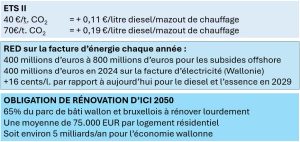
All these pieces of legislation must come into force by 2030. All of them will have a considerable financial impact on businesses and households. In every case, they need to be phased in to take account of the reality on the ground.
ETS, RED and EPB are all methods and secondary objectives aimed at achieving an overall target of reducing greenhouse gases. They are not ends in themselves. They can be revised without undermining the climate objective.
ETS II will come into force in 2028. CBAM in 2027. ETS I is already in force.
Carbon pricing is useful in the long run. But moving too fast and too hard leaves economic actors caught in a bind. We are calling for:
- Defining price corridors per tonne of CO2 with caps by date, to provide predictability for economic actors while preserving the flexibility of a carbon market.
- Transforming the CBAM into something simpler and more effective
- Retaining the option to suspend them if necessary (dumping, etc.)
RED III: most renewable energy sources are profitable. Member States must be allowed to choose their mix based on their strengths:
- We are calling for the phased implementation of RED III
- Advocating its removal within the new 2030-2040 framework. Member States should be able to decide their own mix.
EPB 4: Belgium's building stock is far older than the European average. The trajectory is unrealistic given the sheer scale of investment required (€150 billion for residential and non-residential buildings in Wallonia, over 25 years).
- Does the building stock need to be renovated? OF COURSE, but it is unsustainable to lock ourselves into targets that are not achievable.
- At a press conference, Minister Cécile Neven pointed out that, in the programming of the Social Climate Fund for the most vulnerable, the European obligation to achieve EPB A at all costs for the housing concerned limits her to just 3,000 renovations. Her point was: “while I could broaden the scope by setting more reasonable targets and enable more vulnerable households to have decent housing, EU legislation prevents me from doing so.”
- We are simply asking for pragmatism: we cannot electrify everything. Decarbonisation must happen where it is possible and affordable for consumers.
17. BY 2030, €2/LITRE OF DIESEL WILL BE THE DEFAULT NORM
With the RED III legislation (transport section) and an ETS II price of €50 per tonne of CO2, a price of €2 for diesel fuel would become the norm.
The issue of expensive energy is being decided right now.
18. REALITY VS. MAGICAL THINKING
DECIDING NOW FOR THE NEXT 50 YEARS
We were naive:
- we thought the world was not geopolitical, that resources were freely accessible through the market.
- We thought the geostrategic power dynamics of the 19th and 20th centuries no longer applied.
- We forgot that our well-being also stemmed from our productivity, and that this productivity relies on essential supplies
- We were misled by those who told us that energy paradigms could be completely transformed within 30 years.
Within the Mouvement Réformateur, we are calling for two things:
- It is urgent that we defend our interests as Europeans on the world stage.
- We are calling for a fundamental shift in European energy policy so that it returns to greater pragmatism and relies on its entrepreneurs rather than its bureaucrats.