
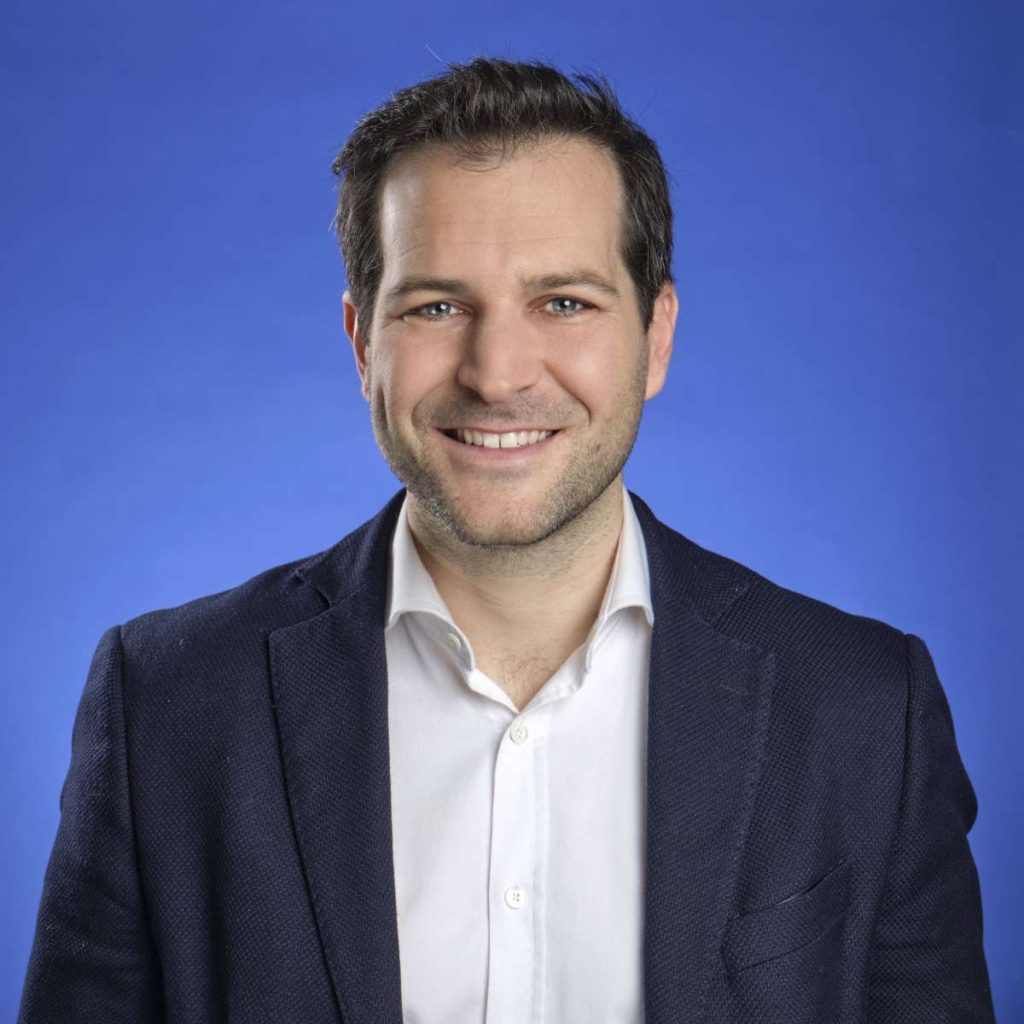
 This week, we're heading to a municipality in Walloon Brabant: Court-Saint-Étienne.
Freshly elected to lead his municipality, Steve De Wevere begins his term facing numerous challenges.
Your watchwords for this term are sustainability, proximity and progress. What are your priorities for Court-Saint-Étienne?
I am the youngest mayor in Walloon Brabant, and it seems undeniable to me that voters wanted a wind of renewal and youthfulness, while keeping a pragmatic spirit and the status of "good manager". My absolute priority is therefore to stay the course and honour that choice.
Generally speaking, my team's ambition and my own fit into a positive dynamic: building on our municipality's strengths, speaking constructively with residents and avoiding systematic criticism. Far from the dogmatic mindset that can sometimes prevail in certain parties, it is essential today to provide modern and sustainable solutions to the challenges facing our society, whether local or not. As liberals, we must embody this dynamism that fosters economic development and improves citizens' quality of life. All this while not forgetting efficiency, by optimising municipal management through agile and transparent governance.
More specifically, our priorities include reducing flood risk, rigorous management of public funds, improving public infrastructure (roads, nurseries, schools) and modernising municipal services. We also want to boost local entrepreneurship and strengthen the village spirit, essential in a semi-rural municipality like Court-Saint-Étienne.
Flood prevention will be a major focus over the coming years. Can you clearly explain the challenges facing Court-Saint-Étienne on this issue and the solutions proposed by the majority?
Flood prevention must be based on scientific data and concrete projects. There's no need to add extra layers of "plans" on top of what already exists: what's needed is concrete, effective action and a swift response to citizens' legitimate expectations. We will therefore move quickly on local projects while revitalising existing initiatives at the provincial level.
Our approach is based on cooperation with the Region and hydrology experts. It also involves encouraging the use of permeable materials in urban developments and promoting more effective rainwater management: every plot of land must play its part in absorbing water.
Besides the flooding, the Dyle flows through the municipality, which represents a major natural asset. How do you plan to make the most of this asset to boost Court-Saint-Étienne's appeal while protecting the environment?
The Dyle, but also the Orne and the Thyle, represents an opportunity for our municipality. It's not just about talking about the constraints, but genuinely turning them into an environmental and tourist asset.
Our approach is pragmatic: promoting responsible activities while making the riverbanks more accessible and pleasant. We want to harness low-carbon technologies to strengthen biodiversity and ensure a harmonious coexistence between nature and development.
This week, your background as an environmental law lawyer proved useful. Can you give us some context on those famous felled trees and explain, in practical terms, the role of the municipality and the mayor in such cases?
This situation highlights the need for clearer, and above all better suited, regulations (too much red tape!). Whether from the municipality's point of view or the applicant's, nothing is being done to simplify procedures.
Beyond that, my role is to protect our environment by ensuring that every intervention respects the rules and has no negative impact on biodiversity. The challenge is to be at the forefront of environmental issues while remaining pragmatic.
Nowadays, no one has a monopoly on environmentalism.
Since taking on the role of mayor, it seems like current events and news stories in Court-Saint-Étienne never stop. Mayor 24/7. How are you handling this new life at the heart of your municipality?
Let's just say things got off to a flying start, since I was very quickly confronted with several emergency situations (a landslide, a rail accident, flood risk, etc.) that required an immediate response. Nothing was spared me! Middle-of-the-night calls and crisis management are now part of my daily life.
But seriously, taking on this role is above all a real joy. I'm naturally dynamic, I throw myself into things 200%, with a lot of enthusiasm. That's just as well, because this role demands responsiveness, foresight and availability.
It's also a matter of management and leadership, and I intend to embody this role with the same rigour as my predecessor.
Your municipality has a rich industrial past and remarkable heritage. Do you have plans to make better use of these assets and boost Court-Saint-Étienne's tourist appeal?
Court-Saint-Étienne has untapped potential. Twenty years ago, this municipality was neglected. Today, it's gradually reviving, and I'm delighted about that. The task now is to build on what has already been done and be ambitious in turning our past into an asset for the future.