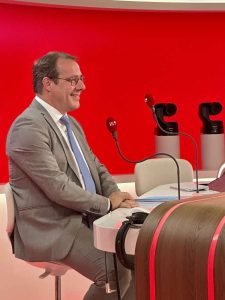
Presented as the “reed of this government” (one that bends but does not break), David Clarinval was interviewed this week on Bel RTL. The Deputy Prime Minister and Minister for Employment, Economy and Agriculture had the opportunity to defend the Government's reforms and outline the main lines of the budget.
“We need to find €16.6 billion by 2029. The monitoring committee has identified spending overruns. Belgium is one of the countries that spends the most, so we will need to make savings.”
A colossal challenge based on reforms, a growth strategy to strengthen the competitiveness of our businesses, and the modernisation of the labour market, without affecting purchasing power.
On this point, the Minister recalled that Belgium is one of the few countries in the world with automatic wage indexation, a mechanism that protects workers' purchasing power. “In 2025 and 2026, a wage increase of 5.5% is planned. That's almost as much as all our neighbouring countries combined. We are going to raise the lowest wages: €35 on the minimum wage, allow meal vouchers to increase, and carry out a tax reform that will give single people €150 more per month and households €275. So many measures to drastically increase workers' purchasing power.”
Night shift bonuses: nothing changes
David Clarinval's appearance on BelRTL's morning show was also an opportunity to debunk some fake news, particularly about night work. He clarified: “Night shift bonuses, whether for nurses, train drivers, or anyone else currently receiving them, will not change for them. We need to stop letting people believe that night bonuses are going to be abolished. That's false. The only thing that changes is that we will create the possibility, for large e-commerce companies not currently present in Belgium, to benefit from shorter night shifts in the future.”
It is with this vision, focused on the growth strategy, that discussions on the budget continue.
Full interview