
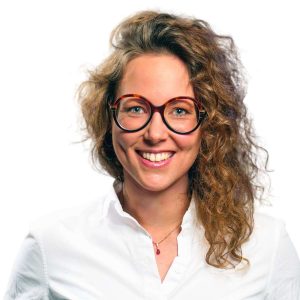
Nestled in the heart of Hainaut, Chièvres is a human-scale municipality where, since October 2024, Zoë Delhaye has held the office of mayor.
Having already served as alderwoman, she knows the local challenges well. A meeting with a mayor fully rooted in her municipality.
In 2018, you became alderwoman in a majority with Ecolo. In December 2021, you lost your position when the majority changed and joined the opposition. And today, after the latest elections, you are mayor! Is this primarily an opportunity or also a form of revenge?
I would speak of a passion for serving citizens and my municipality that grew stronger throughout this journey, both in the majority and in the opposition. Being naturally positive, I saw these stages as an opportunity to wear different hats and gain new skills. As they say: “What doesn't kill you makes you stronger.”
An opportunity, because these experiences also allowed me to propose an alternative for change by putting together a list bringing together candidates from MR, Les Engagés and non-affiliated candidates. This openness convinced the people of Chièvres, who placed their trust in us by giving us an absolute majority.
You are the youngest mayor in Picard Wallonia, while continuing to work at the FWB in the territorial hubs department. How do you manage to combine these two roles and handle these responsibilities?
My days are like marathons, I plan and optimise my schedule to the maximum! The role of mayor now takes up most of my time, and I have reduced my hours at the FWB.
The mandate and the role at the FWB are complementary: as education falls within my responsibilities, I am in constant contact with school leaders, teaching staff, pupils and their parents. At the same time, my work in the administration gives me an overall view of education and allows me to work directly with the Minister's Cabinet, linking decision-making with implementation on the ground. A real win-win.
Children are our future: their education and wellbeing are the priority of my mandate.
You have spoken out in favour of strengthened citizen participation. Can you give us a concrete example of a mechanism you would like to introduce or strengthen?
Our municipality was affected by PFAS contamination of the drinking water supply. A crucial health issue requiring specialised scientific knowledge that a rural municipality's staff simply do not have.
To address this weakness, we seized the opportunity to create a PFAS advisory council made up of engaged citizens, experts - such as Dr Paulius - and politicians. This collective intelligence allows us to analyse the documents received, question stakeholders and propose courses of action to the college.
By the end of your mandate, what is your vision for Chièvres? What would you like the municipality to look like in a few years' time?
My dream for Chièvres: a modernised, dynamic town that keeps its rural soul!
Modernised in various respects, particularly in the management and organisation of municipal staff, who are the true wealth of our town. We are, in fact, in the process of revising the work regulations.
Dynamic and aiming to be a driving force for proposals and support for families by solving the shortage of childcare places. Dynamic and “AGILE” in facing the many financial challenges awaiting municipalities, such as by anticipating the merger of the town and the CPAS.
Rural, finally, because preserving Chièvres's identity, community life with our farmers and its friendly atmosphere remains essential.