
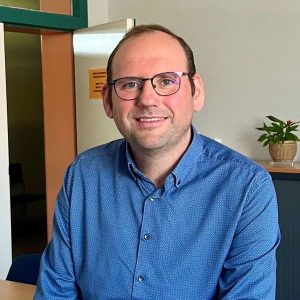
 This week, the MR stops in Celles, in the heart of Walloon Picardy. Head of the municipality since 2020 and re-elected in the January 2025 elections (in Celles, the elections had been annulled!), Mayor Michaël Busine embodies a close-to-the-ground team that combines day-to-day management with a vision for the future.
A rural municipality with villages of strong character, Celles appeals through its preserved quality of life, its lively community associations and the quality of its services. Attracting new families while remaining true to its identity, it rises to the challenge of controlled development, reconciling attractiveness, investment and the preservation of its rural character.
Celles is a municipality with very strong local roots and a particularly lively civic life. You chose to get politically involved here and today play a central role in the day-to-day management on behalf of residents. Could you look back on your journey, both personally and professionally as well as within your involvement in the liberal family, and explain what led you to take on the role of Mayor?
I am, above all, someone from Celles who is deeply attached to his municipality. I've lived here since I was very young and, like many residents, I'm convinced that the richness of Celles lies in its villages, its community associations and its people.
My professional career in education and my responsibilities in the community sector taught me the importance of listening, dialogue and a sense of collective effort.
From an early age, I wanted to get involved in my municipality, convinced that local politics has the greatest impact on citizens' daily lives.
My involvement within the liberal family was built around values that resonate with me: responsibility, closeness to people and trust in local initiatives. I then had the opportunity to hold various mandates; elected in 2006 at the age of 22, I got involved straight away, notably as Chairman of the CPAS, a particularly enriching experience on a human level.
Becoming Mayor was not an end in itself, but the natural continuation of a commitment to serve Celles. It's a demanding role, but also a tremendous responsibility. Every day, I try to carry out this mandate with closeness to residents, pragmatism and a constant concern for moving our municipality forward for the benefit of everyone.
“Celles brings together several villages, each with its own identity, while sharing a common municipal project. In a context where issues of mobility, support for local businesses, access to public services, energy sovereignty and maintaining a vibrant community life are increasingly felt, your team continues to work on several key projects for the future. Could you tell us about the priorities of this term, the main ongoing municipal matters, and how you intend to further strengthen the attractiveness and well-being of Celles in the coming years?”
Our ambition is clear: to allow everyone to live well in their village while strengthening the cohesion of the whole municipality.
This term is resolutely forward-looking, but follows the line we set for ourselves: voting for continuity and stability.
We are continuing key projects such as the redevelopment of village centres, flood control, improving mobility and road safety, as well as the renovation and modernisation of our municipal infrastructure.
We also want to support everything that creates strong bonds, because a lively municipality is made up of residents who meet each other, businesses that thrive and associations that create connection.
Energy and environmental issues are also central to our concerns. We have decided that, by 2030, all our buildings will be self-sufficient in terms of electricity through the installation of photovoltaic panels.
“Celles is also a great place to live, with a high-quality natural environment, local events, sports clubs and a community fabric that contributes to the municipality's reputation beyond its borders. This identity, at once rural, welcoming and open, attracts new families while staying true to its roots. How, in your view, does the municipality manage to reconcile this village character, where people still know each other, with the ambition to develop economically, attract new projects and further strengthen its role in Walloon Picardy?”
I believe the strength of Celles lies precisely in this balance. We are a rural municipality where people still know each other, where community life is rich and where each village retains its own identity. This is a treasure worth preserving.
For several years now, our municipality has also been attracting new families, particularly Dutch-speaking ones. This phenomenon reflects the attractiveness of Celles and, above all, these new residents integrate fully into local life. They use our municipal nursery, our schools, our sports facilities, our municipal halls and take part in the community dynamic that is the strength of our area.
This attractiveness goes hand in hand with well thought-out property projects that make it possible to welcome an active population and strengthen our municipal finances. This is an essential issue: having the resources needed to keep investing in the quality of public services, infrastructure and the well-being of all citizens.
That said, our ambition is not to grow Celles at any cost. We want to preserve what makes up its identity: its rural character, its landscapes, its friendliness and its quality of life. Today's challenge is to reconcile development and preservation, so that future generations can enjoy a dynamic municipality without it losing its soul.
Ultimately, I'm convinced that the future of Celles is built on this balance: welcoming, investing and developing, all while staying true to who we are.